Posts

Warli Painting — Art made from geometry

Image
India is a treasure of traditional or culturally diverse art forms. India’s Folk painting is also part of the tradition and has a long history in Indian art. Some of the most famous Indian folk paintings are Warli paintings of Maharashtra, Madhubani of Bihar, Phad Paintings of Rajasthan, Kalamkari of Andhra Pradesh, Aipan of Uttarakhand, Pithora paintings of Gujarat, Gond and Mandala paintings of Madhya Pradesh, and Kalighat paintings of Calcutta, etc. Warli Art is best known and is very different from other Folk and Tribal paintings of India. While there are no records of the exact origins of this art, its roots may be traced to as early as the 10th century AD. Research suggests that the tribal are the propagators of a tradition that originated in the Neolithic period between 2,500 BC and 3,000 BC. Artisan making Warli Art on the Wall The word “Warli” comes from the word “Warla” which means “piece of land”. It is a culture of the Warli Tribe community. Warli Tribe resides in the mount...

Handloom Weaving and Hand knitted craft of Himachal

Image
Himachal is the land of snow with mountains and rich forests. Himachal is not only famous for its beauty but also for handmade products created by artisans. Art and craft of any region is a reflection of its tradition, environment and people. As Himachal has unfavorable climatic conditions and geographically difficult region so for people it’s difficult to remain outdoor for around six months. People utilize their time in weaving wool and other crafts. The craft of Himachal is shawls, carpet, paintings, leather works, woodworks, metalware, knotted socks, cap and woolen textiles which also attract tourists. From all craft, shawls are the most popular craft of this region. Handloom Weaving Woolen products of Himachal are most popular across the country and the international markets. People from different castes are engaged in weaving in Kullu, Himachal. Various kinds of woolen clothes are made by Himachal artisans like shawls, pattus, patties, lahang, etc. Every household has its own pit...

Cheriyal Scroll Paintings – Storytelling in the form of paintings

Image
Cheriyal Scroll Paintings is a very old traditional painting of Telangana state. Cheriyal paintings are the pictorial presentation of scenes from Indian mythology. These paintings are practiced in Cheriyal village of Warangal district in the Telangana State. The presentation of this painting is narratives like film roles or comic books. Traditional folk singers and artists used to use this as a tool for visual presentation with harmonium, tabla and other instruments to narrate the story. Cheriyal paintings are stylized versions  of  Nakashi art (scrolls of narratives from mythology and folklore). The artisans have been identified by the ruler of the Kakatiya era and the Nizams around 400 years ago. Originally artisans used to work on Sawdust Masks, Toy making and Scroll painting skills, Now became popular as Cheriyal Painting. Cheriyal Painting on Indian Mythology Cheriyal scroll paintings depicting stories from Indian mythology and intimately tied to the shorter stories from ...

Silver Filigree - Craft of Cuttack

Image
Silver Filigree also known as Tarkasi is more than 500 years old craft. It is traditionally done by the local artisans of Cuttack district, Orissa. In Odiya Language, Tara means Wire and Kasi means to design. Silver bricks are transformed into thin fine wires or foils and it used to create jewelry or showpiece out of it. Filigree has been traditionally associated with fine craftsmanship and luxurious design in classical jewelry. To members or stakeholders of the Indian jewelry industry hardly need any introduction of filigree. Historians have attributed the advancement and mastery of the filigree craft to Egyptians, Greeks and Etruscans around 6 BC to 3 BC. In Mesopotamia, filigree workmanship in silver and gold is prevalent today and their ‘Telkari’ jewelry is known for its delicate designs. However, archaeologists have dug up interesting evidence of a highly evolved filigree making technique dating 2 BC to 2 AD, from Peddabunkur, Kotlingala, Dhulikataand Kondapur in Andhra P...

Rogan – The Wearable Painting Art

Image
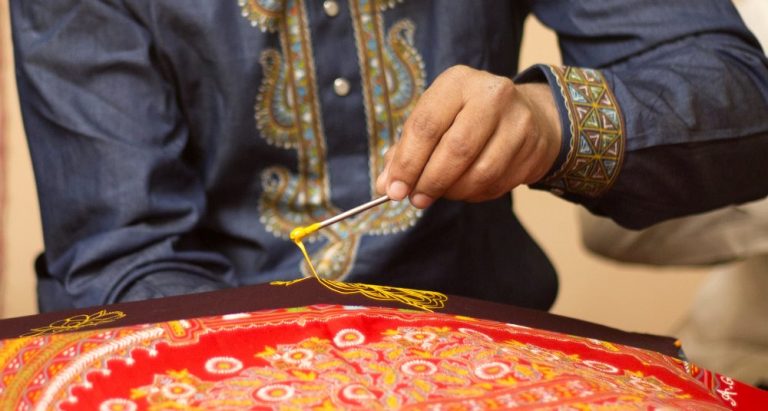
Rogan is a conventional hand painting Art of Kutchh, Gujarat. It is an ancient skill originated in Persia and came down to Kutchh around 300 years ago. Rogan means oil-based in Persian as flower motifs and designs speak of Persian influence. This art was practiced in Baroda, Patan, Khavada of Kutch in Gujarat and Nasik of Maharashtra but now it is only done by Khatri communities of Nirona village in Kutchh. Rogan is a form of painting used to decorate the fabrics. Rogan painting is known for its technique and beauty which gives the impression of embroidery. Unlike other folk paintings of India, Rogan painting has not explored until now. Khatri the community of Kutchh is said to be a perfectionist in this art. This community has been engaged in this art for centuries and this technique has been passed from several generations. Only nine members of the Khatri communities are practicing this art. The eighth generation of the Khatri family has been practicing the ancient art....

Longpi Pottery

Image
Longpi pottery is known as Longpi Ham or Black pottery. The name Longpi pottery is derived from the Longpi village of Ukhrul district, Manipur. Tangkhul Naga tribe of Manipur is engaged in this activity of making beautiful pieces of earthenware. The majority of  villagers are engaged in making preparing handmade pots and household ware as it is an important occupation for them after agriculture. This pottery is known for its unique shapes and designs as well as its texture and metal-like appearance. Longpi pottery is used as kitchen utensils or decorative items in the household. Villagers either sell or make the pottery for their personal use. Longpi pottery is also called as ‘Royal Pottery’ because these craft items were only owned and used by the noble families of Manipur. People also use it for ritualistic purposes, owing to its link with the Goddess Panthobi and during childbirth or marriage ceremony. A Single village has around 400 households with just 200 art...

Maheshwar Handloom— Art Revolution by Ahilya Bai.

Image
Maheshwar is a town located on the bank of river Narmada in the Dhar District of Madhya Pradesh. Maheshwar handloom is among one of India’s well-known handcrafted textiles loved for its fineness, comfort, delicacy, and sophistication. Maheshwari textiles were spun by expert artisans that Queen Ahilyabai Holkar brought from Varanasi, Hyderabad, and Surat to weave sarees which are traditional, unique and ethnic. These weavers follow the designs that are inscribed on the walls of Ahilya Fort. Interestingly, the handloom operations that were carried out in the 18th century are still carried out today by using natural fibers. Even today these designs can be found on the borders of Maheshwari sarees. Maheshwar Cluster has more than 4500 artisans, producing traditional products for generations. Handloom industry in Maheshwar employs people from various castes and religions, including Kshatriyas, Bharuds, Muslims, Kumhars, and Kahars. This cluster is concentrated on handloom produc...